Melbourne Based Well Site Geologist
Mobile (Australia): (+614) 1290 1844
Timothy Casey B. Sc. (Hons.)
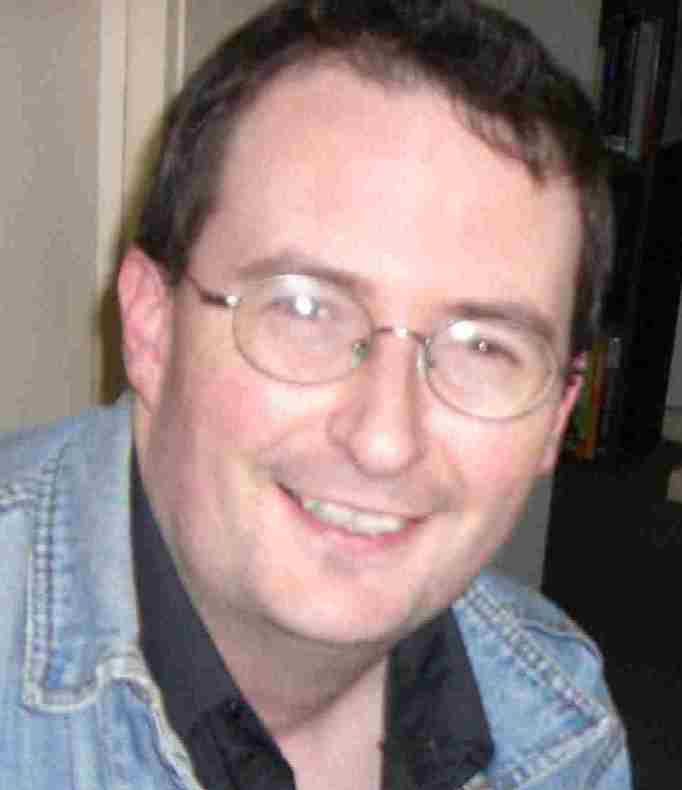
An Australian well site geologist with a Bachelor of Science degree with Honours by research, ten years of broad technical experience in the petroleum industry including CBM, high problem solving skills and demonstrated software capability.
Well site geologist experience includes chip logging or "mudlogging", wireline log interpretation, production zone identification, picking formation tops, devising lag approximation formulae for client, daily reporting for geological operations, management of those operations in compliance with environmental conservation guidelines and with respect to local cultural sensitivities, definition & implementation of SOP & client-specific OH&S policy.
Rig supervisor or "company man" experience includes reporting on engineering operations, activity logging, conducting well site inductions, overseeing BOP tests & conducting crude LOTs, and general well site supervision such as conducting safety meetings & preparing JSAs as required, signing on/off as permit authority, supervising visitors, opening and closing access roads as dictated by weather & client liabilities, and organising in timely manner; transport, fluids, services & equipment as required by the well site.
As a Scientist...
I am not particularly partial to any ideas that are not directly supported by material evidence. History has taught us that scientists have never been clairvoiyant and those venturing beyond the implicit limitations of material evidence are rarely, if ever, correct in their speculations. The theory of luminiferous aether presents us with an object lesson. With early Renaissance proponents, such as Rene Descartes, and later formalisation by Robert Hooke, luminiferous aether gained enormous support in spite of the early experiments that called the theory into question (Whittaker, 1910). Even when totally refuted by the Michelson-Morley experiment in 1887, many career scientists remained in denial, in spite of the emerging quantum theory. Svante Arrhenius was one such scientist and, by applying a superficial mathematical veneer to popular conceptions such as Tyndall's idea of aethereal heat transfer (Tyndall, 1861, p. 285), Arrhenius (1896, p.255) devised the conjecture that was soon labeled, the "Greenhouse Effect". Like many career scientists, even two decades after the Michelson-Morley experiment demolished the idea of aether, Arrhenius (1906, p. 154, 225) continued to glibly propagate the idea, as if it had never been challenged. Investigation of the science, or lack thereof, behind the "Greenhouse Effect" exposes it as another career proposition just like luminiferous aether, with yet another refutation (Wood, 1909) that is studiously ignored. The lesson we learn from the history of science is that scientific-sounding speculations have little, if anything, to do with science. This is why I allow neither my career nor my ambitions to encroach on any scientific research in which I am engaged. Moreover, my approach to science ensures that, from me, you will always get a straight answer about what has been found, instead of arm-waving about what may or may not be found.
As an Achiever
My scientific deferral to material observation has forced me to accept that things do not always work as we expect them to, and my determination ensures that if there is another way, I will generally find it. This web site is a case in point. It works differently to other web sites and the functionality is neither hindered by your choice of browser nor by any reluctance on your part to allow web-based scripts to run on your computer. Everything here, from static panels to drop down menus, has been designed to operate irrespective of how you surf the web - all while conforming to international standards. My unwillingness to settle for second-best and my adherance to the scientific method both contributed to the combination of functionality and interoperability you see on this site. I don't speculate. I pose a question and make an observation to get my answer. This allows me to acquire expertise on my own initiative. Consequently, I have developed unique web technologies such as my interoperable and standards-compliant drop-down menus which are a world-first. Unlike simpler modern variants, my menus function correctly with the older browsers without upsetting accessibility tools such as brail readers for the visually impaired. This does not limit the breadth of my knowledge and expertise. It is meagrely an example of what I am capable of, without formal training or qualification. However, I do have a Bachelor of Science with Honours by research majoring in geology. I don't know if that counts as "formal qualification" in this day and age and political climate, but there it is.
Refereed Papers
Jago, J. B., Gatehouse, C. G., Powell, C. M.c.A., Casey, T., Alexander, E. M., 2010, "The Dawson Hill Member of the Grindstone Range Sandstone in the Flinders Ranges, South Australia", Transactions of the Royal Society of South Australia, Vol. 134, pp. 115-124, http://www.ingentaconnect.com/content/rssa/trssa/2010/00000134/00000001/art00008.
Jago, J. B., Gatehouse, C. G., Powell, C. M.c.A., Casey, T., 2013, "Implications of cross-bedding data from the upper part of the Cambrian succession, Arrowie Basin, South Australia", Australian Journal of Earth Sciences, Vol. 60, pp. 231-240, http://www.tandfonline.com/doi/abs/10.1080/08120099.2012.751454.
Jago, J. B., Gatehouse, C. M.c.A., Casey, T., 2013, "Response to . J. Retallack's 'Discussion' of Jago et al. (2013)", Australian Journal of Earth Sciences, Vol. 60, pp. 543-545, http://www.tandfonline.com/doi/abs/10.1080/08120099.2013.814806.
Unrefereed Journal Articles
Casey, T., 2010, "Volcanic Carbon Dioxide: Guesswork, Politics and Intemperate Volcanoes", Australian Institute of Geoscience News, No. 100, pp. 8-17, http://www.aig.org.au/assets/368/2010-03_AIG_News_100.pdf. An updated version of the article is also available at http://carbon-budget.geologist-1011.net/
Further Reading
Arrhenius S., 1896, "On the Influence of Carbonic Acid in the Air Upon the Temperature of the Ground", The London, Edinburgh, and Dublin Philosophical Magazine and Journal of Science, Series 5, Vol. 41, pp. 237-279.
Arrhenius, S., 1906b, Världarnas utveckling (Worlds in the Making: The Evolution of the Universe), H. Borns [Translation in English Published 1908], Harper & Brs, New York.
Michelson, A. A., & Morley, E. W., 1887, "The Relative Motion of the Earth and the Luminiferous Aether"American Journal of Science, Vol. 34, p. 333
Tyndall J., 1861, "On the Absorption and Radiation of Heat by Gases and Vapours, and on the Physical Connexion of Radiation, Absorption, Conduction.-The Bakerian Lecture.", The London, Edinburgh, and Dublin Philosophical Magazine and Journal of Science, Series 4, Vol. 22, pp. 169-194, 273-285.
Whittaker, E. T., 1910, A history of the theories of aether and electricity : from the age of Descartes to the close of the nineteenth century
Wood, R. W., 1909, “Note on the Theory of the Greenhouse”, The London, Edinburgh and Dublin Philosophical Magazine and Journal of Science, Series 6, Vol.17, pp. 319-320.
Follow the resume link to see the well site geologist CV.